AHA CPR Courses.
Basic Life Support (BLS)
CLASSES ON FIRST FRIDAY AND SATURDAY OF EACH MONTH
Price:
Original - $100
Renewal - $65
10% off Alumni Discount
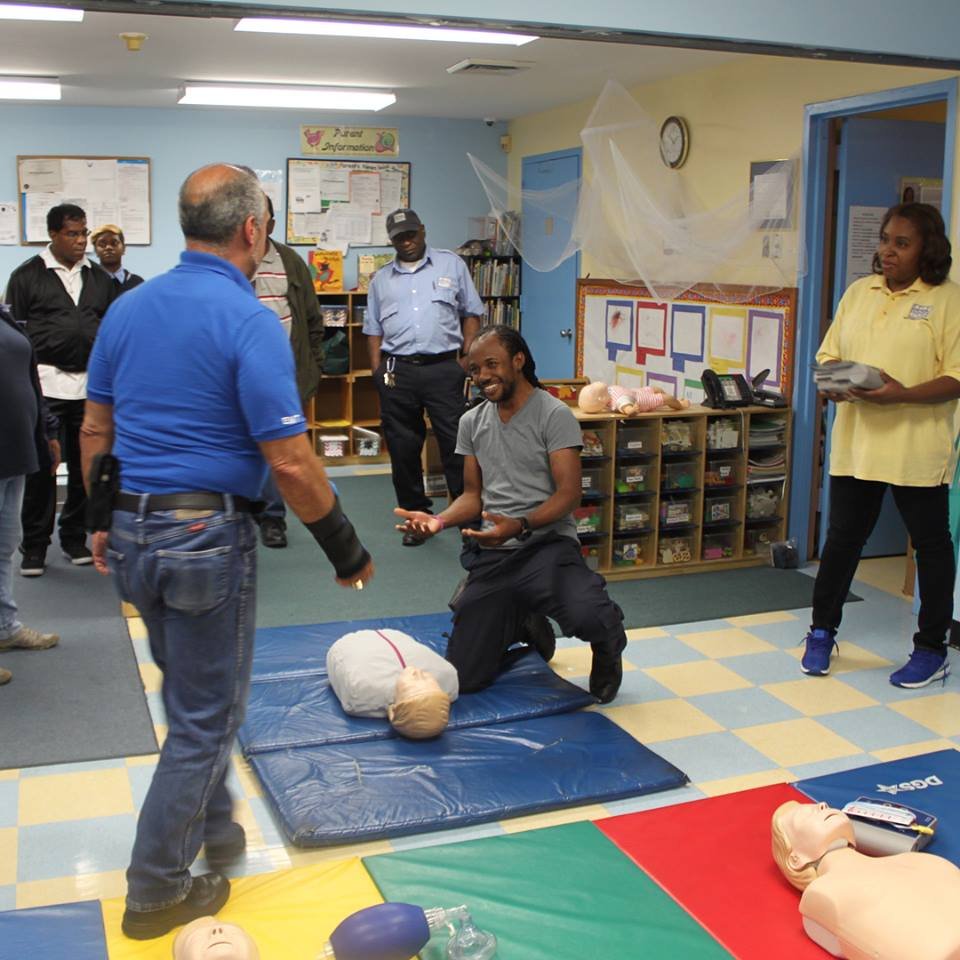
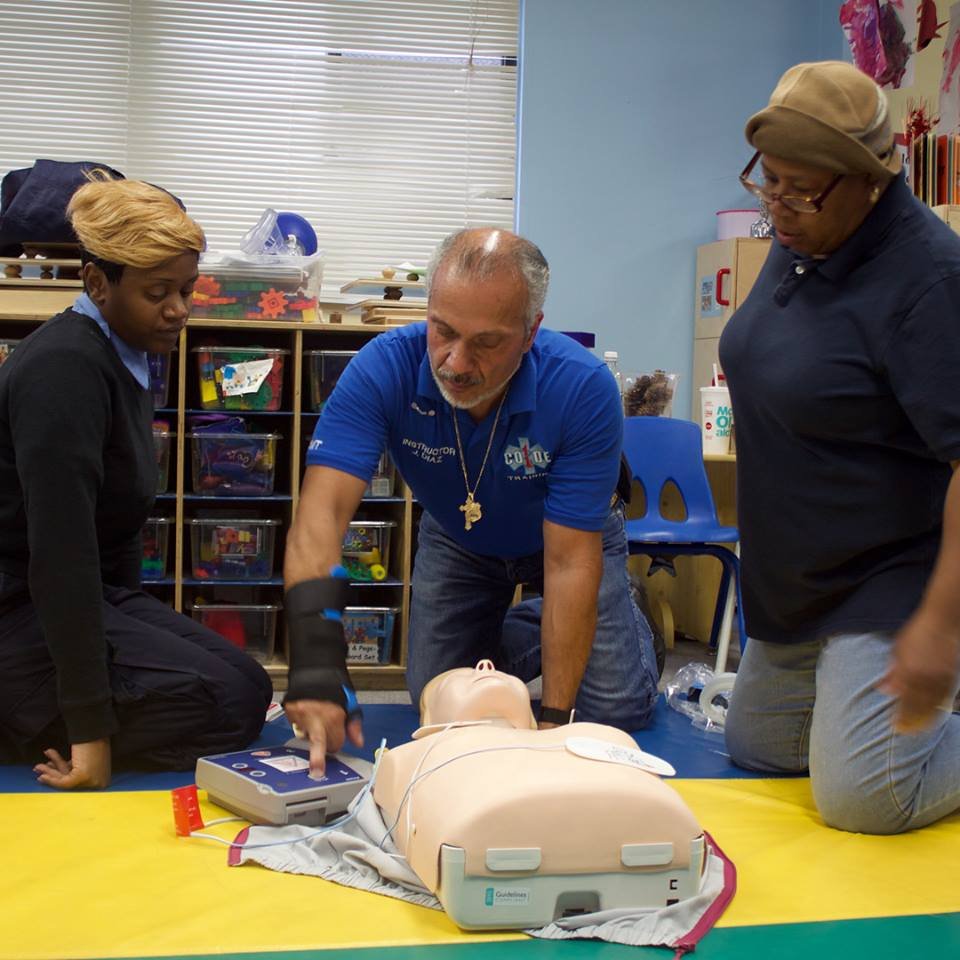
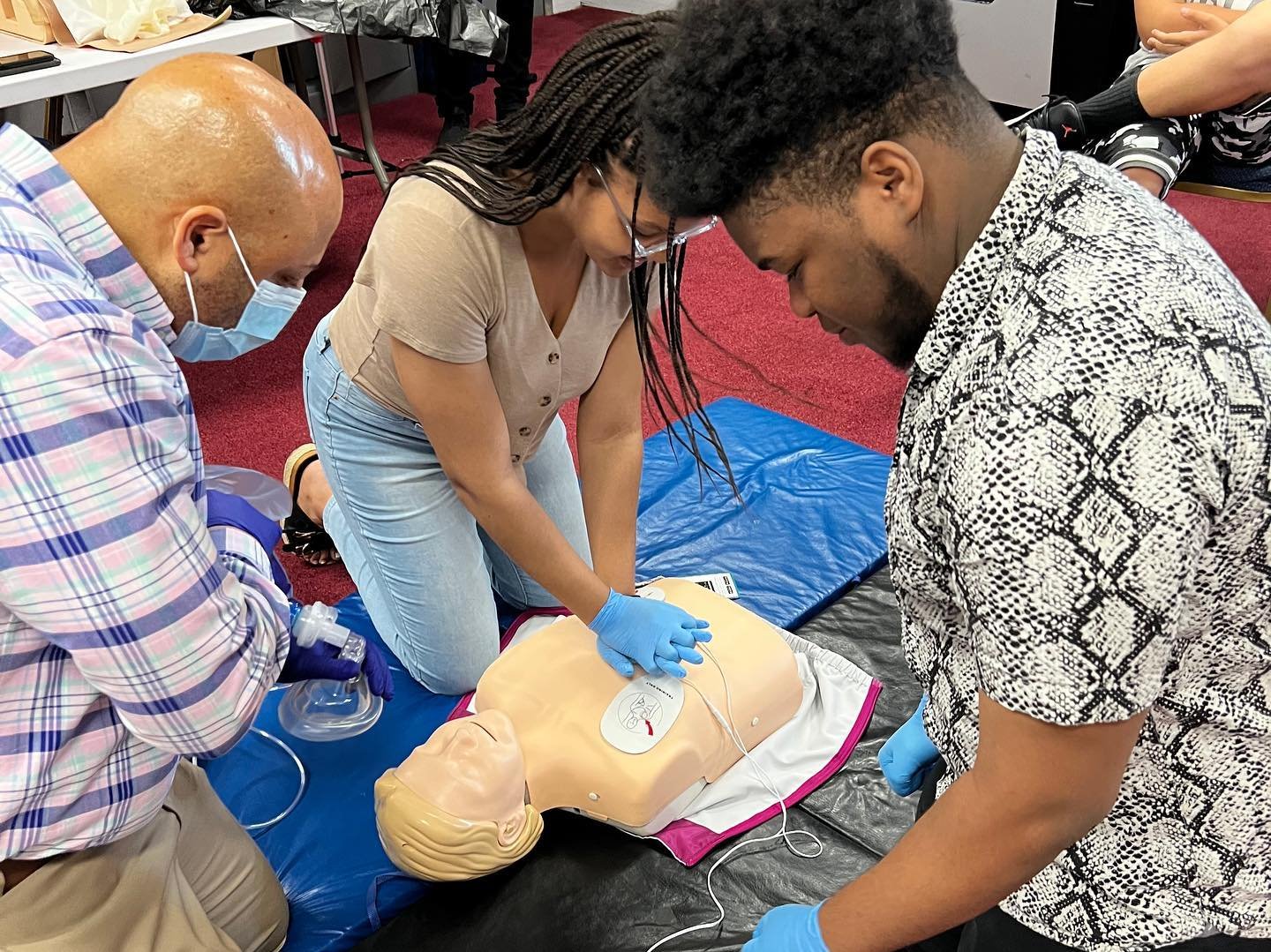
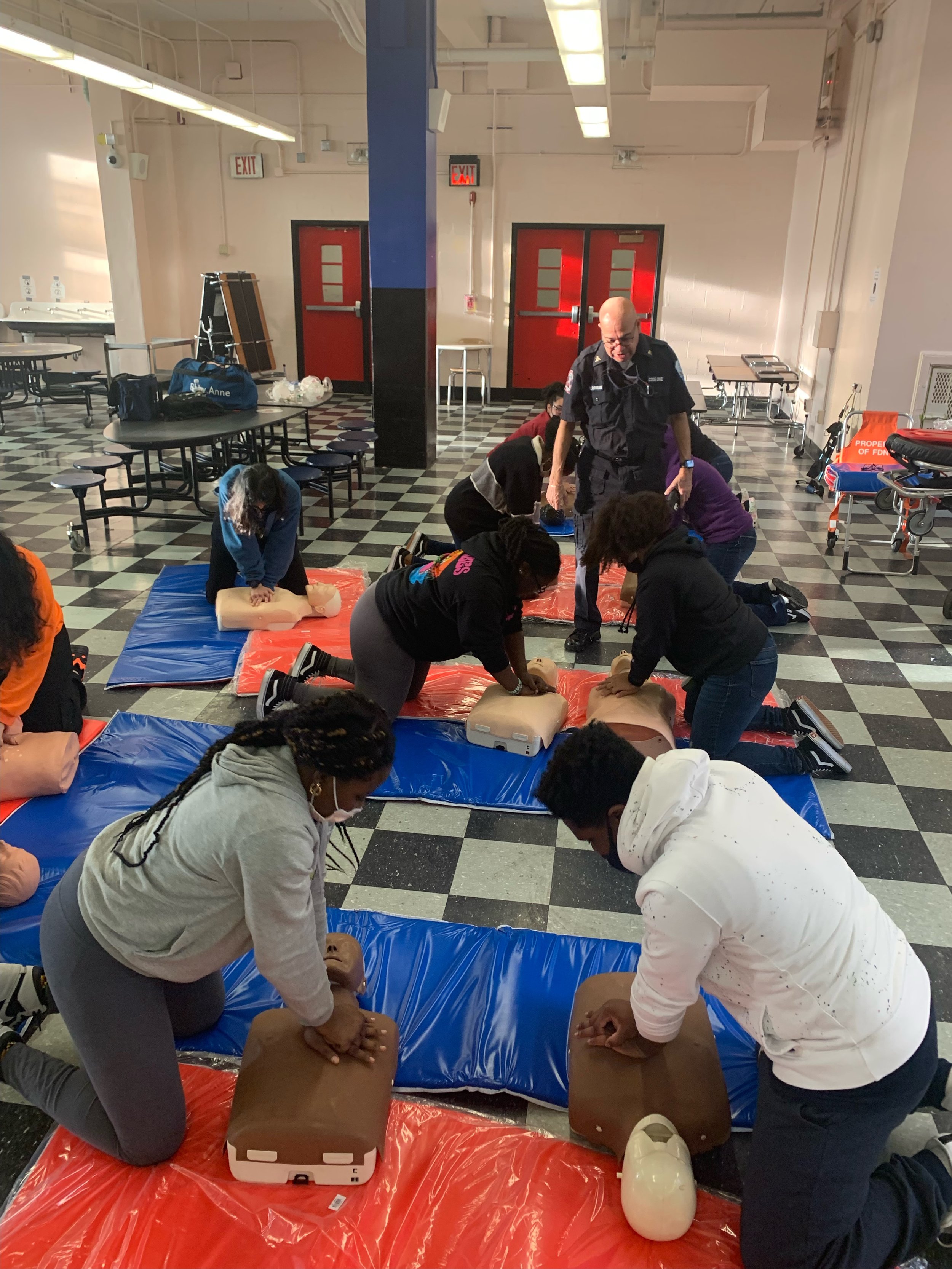
The American Heart Association's Basic Life Support (BLS) course trains individuals to recognize life-threatening emergencies quickly. It is designed for healthcare professionals who need to learn how to perform basic cardiovascular life support skills and CPR in a variety of pre-hospital and in-hospital settings. Participants learn how to deliver high-quality chest compressions and ventilations. The course also covers the early use of an Automated External Defibrillator (AED).
Advanced Cardiovascular Life Support (ACLS)
Price:
Original - $200
Renewal - $165
10% off Alumni Discount
The AHA's Advanced Cardiovascular Life Support (ACLS) course builds upon the foundational skills of Basic Life Support, with a focus on continuous, high-quality CPR. The course is for healthcare professionals who manage cardiopulmonary arrest or cardiovascular emergencies, including paramedics, nurses, physicians, and intensive care personnel. Students learn to recognize and manage cardiac arrest, respiratory arrest, stroke, and bradycardias and tachycardias that can result in cardiac arrest. Through hands-on instruction and simulated cases, the course emphasizes early recognition and time-sensitive intervention by high-performance teams.
Pediatric Advanced Life Support (PALS)
Price:
Original - $225
Renewal - $180
10% off Alumni Discount
The American Heart Association's Pediatric Advanced Life Support (PALS) course aims to improve outcomes for critically ill infants and children. The course prepares healthcare professionals to recognize and intervene in pediatric respiratory emergencies, shock, arrhythmias, and cardiopulmonary arrest. PALS training is intended for professionals required to initiate and direct advanced life support in pediatric emergencies, including pediatricians, emergency room physicians, nurses, and critical care providers. Students learn through simulated pediatric emergencies, focusing on high-performance team dynamics and high-quality individual skills.